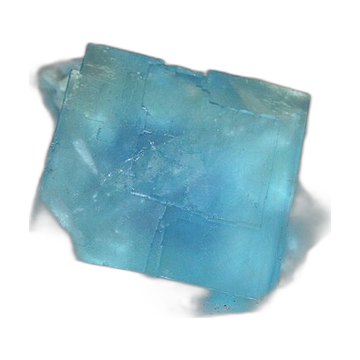
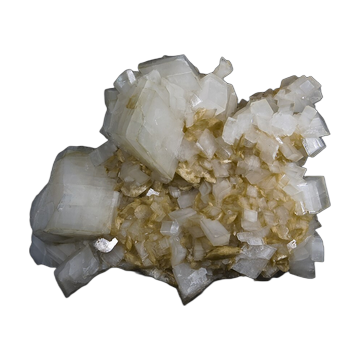
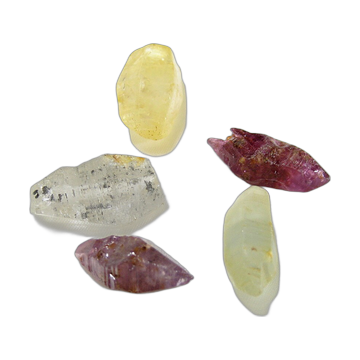
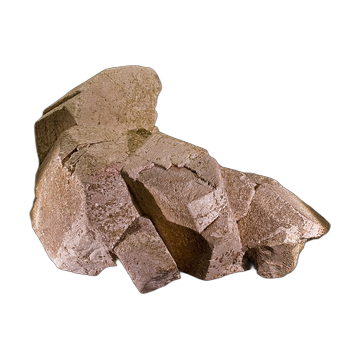
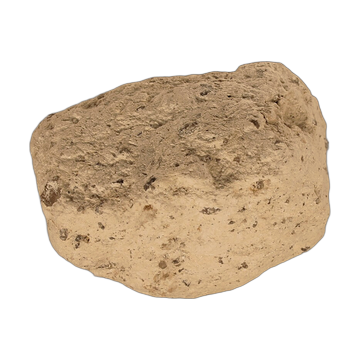
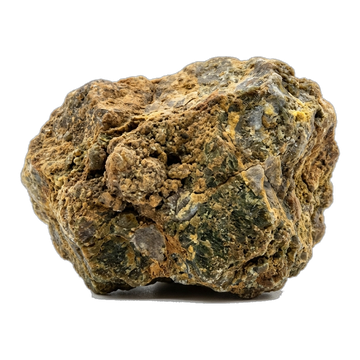
Calcium fluoride, the primary industrial source of fluorine. Metallurgical grade lowers slag viscosity and fluxes impurities in steel and foundry work; acid grade, above 97% CaF₂, is the feedstock for hydrofluoric acid and the wider fluorochemical chain.
- Application
- Steel and foundry flux, hydrofluoric acid, aluminium-smelting flux, ceramics and enamels.
- Conditions
- Acid grade, metallurgical grade, briquettes.
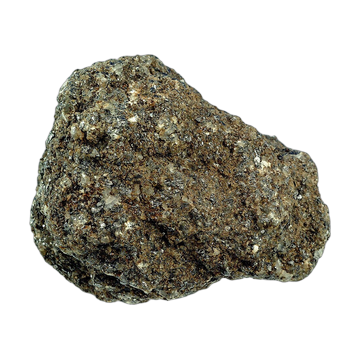
Crystalline carbon prized for the combination of high-temperature stability, lubricity and electrical conductivity. Flake grades carry refractory and battery demand; amorphous and vein grades serve carbon-raising and friction applications.
- Application
- Refractories and crucibles, battery anodes, carbon raiser for steel, lubricants, friction materials.
- Conditions
- Flake, amorphous, vein; sized and purified to carbon content.
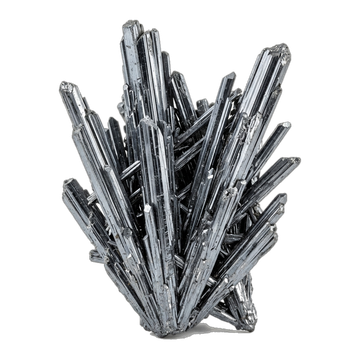
Stibnite, the sulphide ore that feeds the antimony chain. It is bought as concentrate on contained-metal terms and roasted downstream into trioxide or reduced to metal, so the ore itself is the raw position behind flame-retardant and battery-alloy supply.
- Application
- Feed for antimony metal and trioxide, flame-retardant and battery-alloy supply chains.
- Conditions
- Concentrate, milled ore, lump; on contained-metal basis.
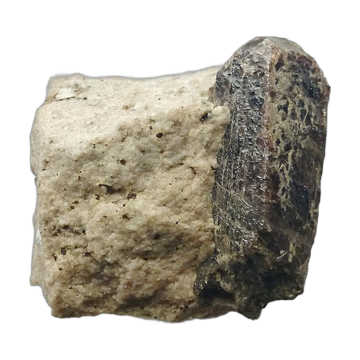
The dense mineral fraction separated from placer sands, chiefly zircon, rutile, ilmenite and kyanite. Each is a distinct product: zircon for opacity and refractoriness, rutile and ilmenite for titanium and welding-flux chemistry, kyanite for high-alumina strength.
- Application
- Foundry and refractory facings, titanium-dioxide feed, welding-electrode coatings, technical ceramics.
- Conditions
- Zircon, rutile, ilmenite and kyanite fractions; sand or milled, to grade.
Magnesium oxide from calcined magnesite or seawater and brine. Dead-burned grades give basic refractories their resistance to steelmaking slags; fused grades push that further for the most demanding linings, while caustic-calcined grades serve chemical uses.
- Application
- Basic refractory brick and gunning, steel-ladle linings, chemical and environmental uses.
- Conditions
- Dead-burned, fused, caustic-calcined; lump or sized.
Zirconium oxide, produced from zircon or baddeleyite, combining a very high melting point with chemical inertness and, when stabilised, real toughness. It bridges heavy-duty refractories and advanced technical ceramics.
- Application
- Refractory grain and coatings, technical and dental ceramics, oxygen sensors, pigments.
- Conditions
- Fused, stabilised or monoclinic; grain and powder to grade.
Aluminium oxide across the grades that matter to industry: calcined and tabular aluminas for high-alumina refractories and ceramics, and fused aluminas for abrasive grain. Phase and purity, not chemistry alone, decide where each grade belongs.
- Application
- High-alumina refractories, technical ceramics, abrasive grain, polishing and fillers.
- Conditions
- Calcined, tabular, white- and brown-fused; sized to grade.
An alkali aluminosilicate that acts as a flux, lowering the melting point in ceramic bodies and glass batches and forming the glassy phase that binds them. Soda and potash grades are chosen for the melt behaviour each process needs.
- Application
- Ceramic bodies and glazes, glass batch, flux, mild abrasive and filler.
- Conditions
- Soda and potash grades; ground to mesh.
A soft white clay of kaolinite, valued for brightness, fine platy particles and chemical stability. Calcined grades gain hardness and opacity, extending it from ceramic bodies into refractories and functional fillers.
- Application
- Refractories and ceramics, paper and paint fillers, fibreglass, catalyst supports.
- Conditions
- Air-float, water-washed or calcined; to brightness and particle size.
Sedimentary or igneous apatite, the mineral source of phosphorus. It is traded on P₂O₅ content as feed for phosphoric acid and fertilisers, with lower-grade material going to direct application and technical uses.
- Application
- Phosphoric acid and fertiliser feed, animal-feed phosphates, technical phosphates.
- Conditions
- Concentrate or beneficiated rock, on P₂O₅ basis; sized or granular.